VoksenBøgen
Timeline
4 months
My role
Concept developer
Platform
Figma
Miro
Problem
VoksenBøgen is a social pedagogical residential facility for citizens who require special support due to being mildly cognitively challenged, emotionally damaged at an early age or psychologically burdened, and prone to substance abuse. Over a relatively short period, VoksenBøgen experienced a significant increase in demand and consequently substantial growth in the number of employees.
Their former digital communication platform comprised a variety of digital tools, as well as email and text message, all intended to coordinate their activities. As VoksenBøgen expanded, it added complexity to the coordination process, causing their internal systems to no longer effectively handle the increased demands.
Solution
Through research my project members and I provided our qualified proposal for a solution. We did not design a product, but rather a solution proposal based on existing digital solutions, particularly EG Sensum One and TicTac. The rationale for choosing EG Sensum One were:
- It offers solutions targeted towards the health and care sector, both public and private.
- It is composed of modules that can support VoksenBøgen’s work and be tailored to their specific needs.
- It provides a wide array of options that encompass all of VoksenBøgen’s essential needs, such as user management, calendar, journal, internal and external communication, and booking.
- It supports the Adult Diagnosing Method for case processing, aimed at adults with mental health issues or social challenges, a method which VoksenBøgen also utilizes.
- It is divided into individual modules that can be added or removed, allowing the system to contain only the functions relevant to VoksenBøgen.
- It is GDPR-compliant
The solution includes a new integrated communication platform, where VoksenBøgen will educate its employees to effectively utilize the solution to optimize their workflow through training in the new system. For educating the employees, we chose TicTac as an e-learning platform. TicTac offers courses, workshops, and templates for e-learning production. Additionally, TicTac provides training on GDPR and information security, which can be relevant for organizations like VoksenBøgen.
Design process
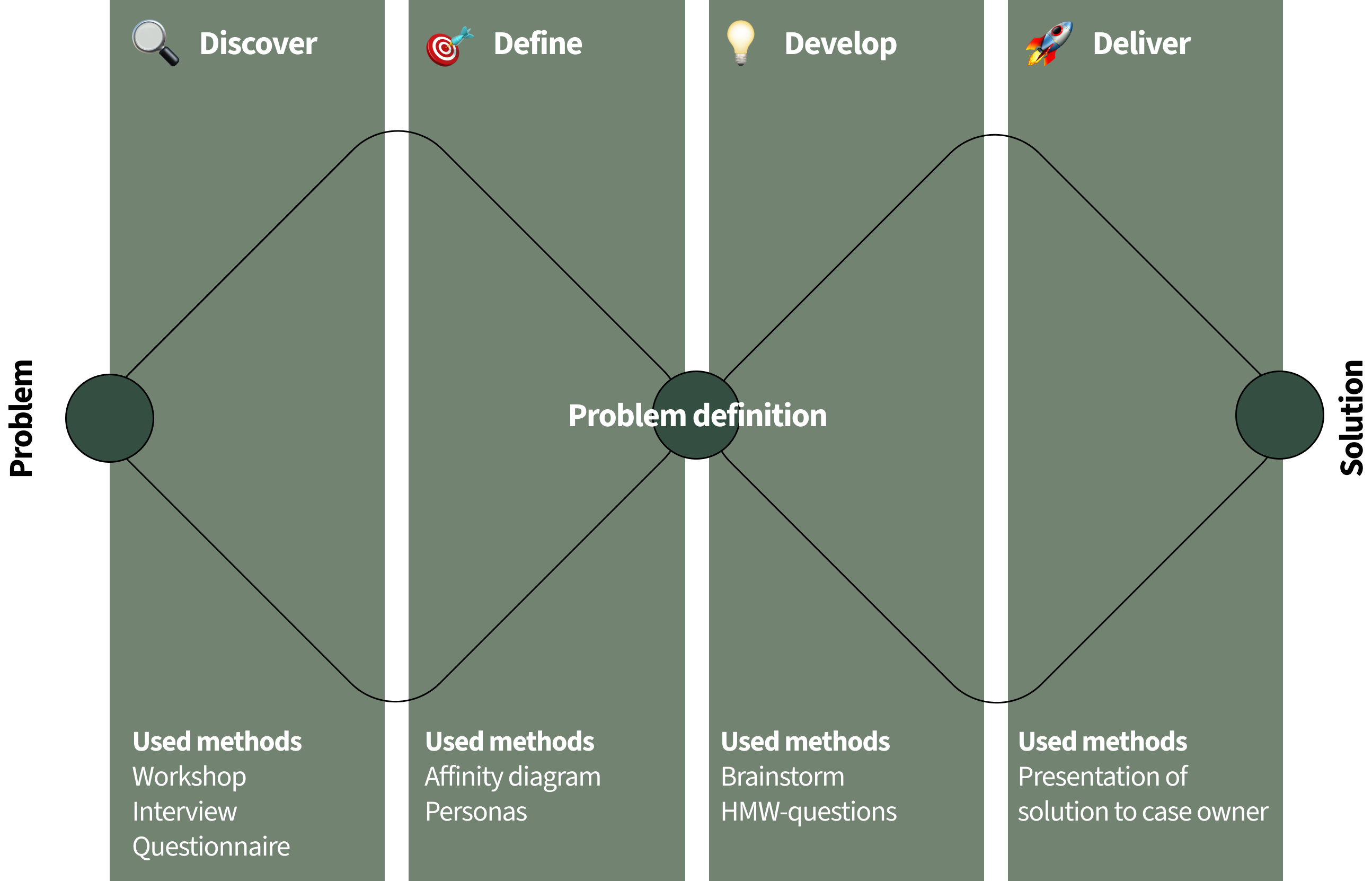
As the design proces for this project, we used the Double Diamond model because it alternately shifts between diverging and converging phases.
Strategic design
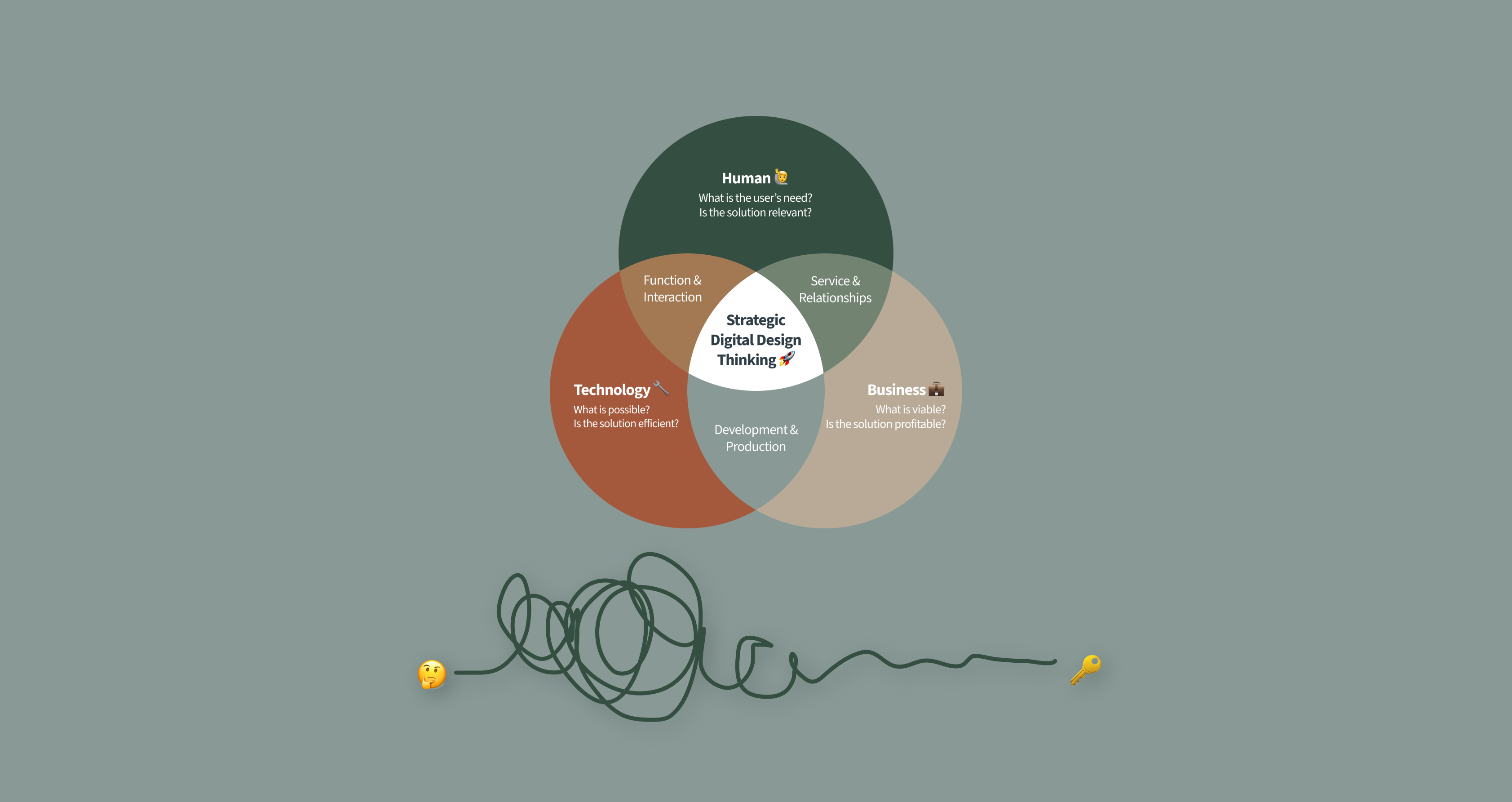
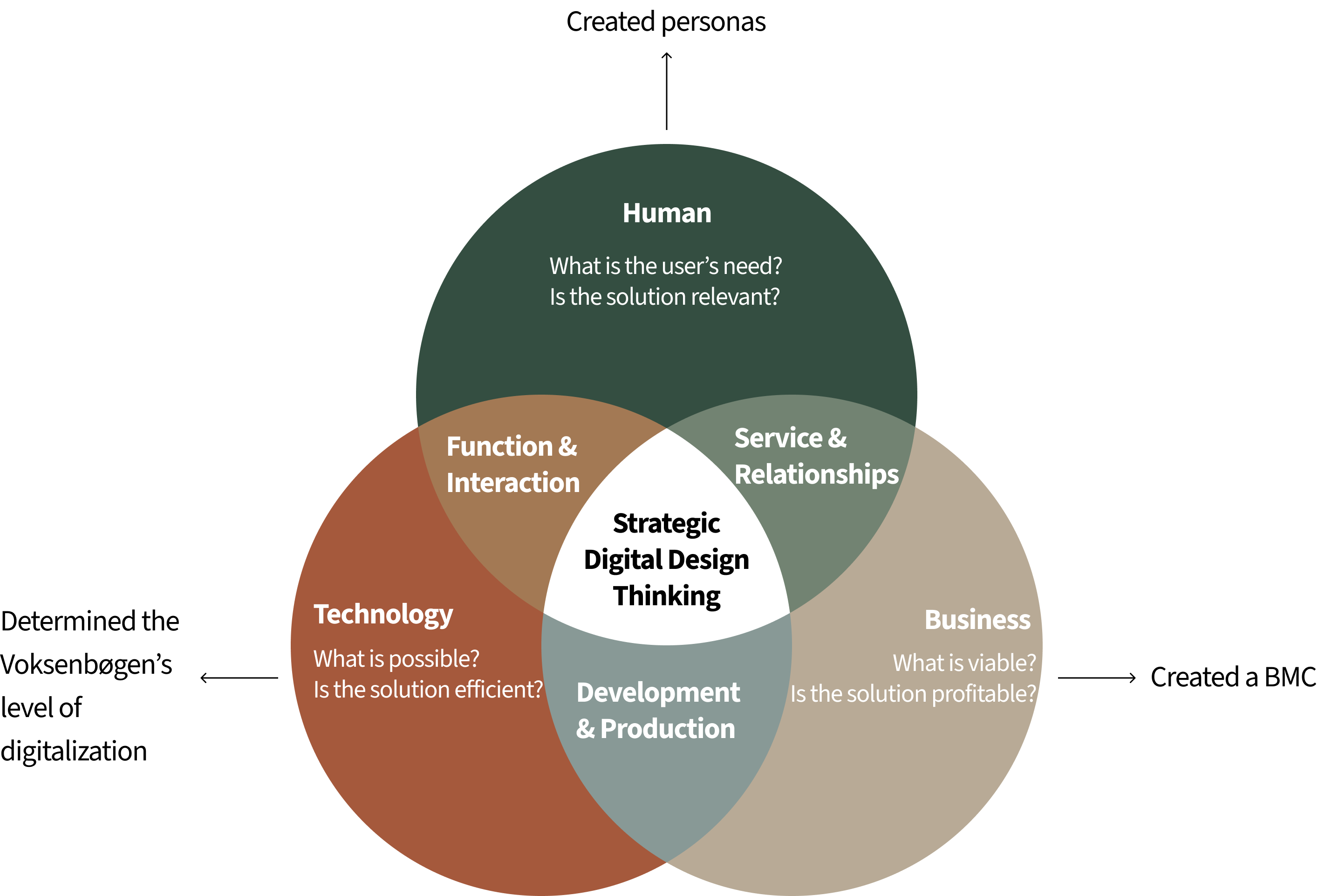
By utilizing the 3D model as a strategic framework tool, we were able to develop a proposed solution for VoksenBøgen. We accomplished this by using the model as an analytical tool, examining the domains of human, business and technology and their intersections. In addition to the 3D model, we also employed other analytical tools such as the Business Model Canvas (BMC) and digitalization waves.
In relation to the business domain, we examined VoksenBøgen’s business model to determine which solution would be viable for them. Regarding the human domain, we explored the employees’ needs and competencies for the new solution. In the Technology domain, we investigated the company’s current technologies to understand what they require and what is lacking in their existing solution.
In the overlaps we focused on:
- Human + Technology
- The interaction and user-oriented interfaces with humans. We directed our attention toward functional design.
- Human + Business
- VoksenBøgen’s emotional connection with the human domain, through its relationships in terms of customer service and social interaction. Here, we directed our attention toward the service-oriented aspect of design.
- VoksenBøgen’s emotional connection with the human domain, through its relationships in terms of customer service and social interaction. Here, we directed our attention toward the service-oriented aspect of design.
- Business + Technology
- The process-oriented overlap where technical development and production take place. This intersection aligns the interface between how a given functional and service-oriented solution is realized in a way that is both technologically feasible and economically viable for the company.
Personas
Based on the data collection and our examination of the employees’ digital literacy, we developed three personas. An IT-savvy employee, a digitally challenged employee, and an employee who falls between the other two, lacking the interest or patience to engage with digital tools that aren’t user-friendly or that hinder/slow down their work. We named the digitally challenged persona Karen.
Karen
- Age: 51 years
- Profession: Social worker
- Bio: Karen is a middle aged woman in her fifties. As a social worker, she loves the personal contact with the citizens and the collaboration with her co-workers. She does not want to waste time on technology that does not work.
“I love the presence with the citizens.”
Wants
- “The more invisible technology is, the better”
- Wants to have control over his own data.
Frustrations
- Is not compliant with technology
- Find technology difficult and strenuous
IT skills

Business Model Canvas
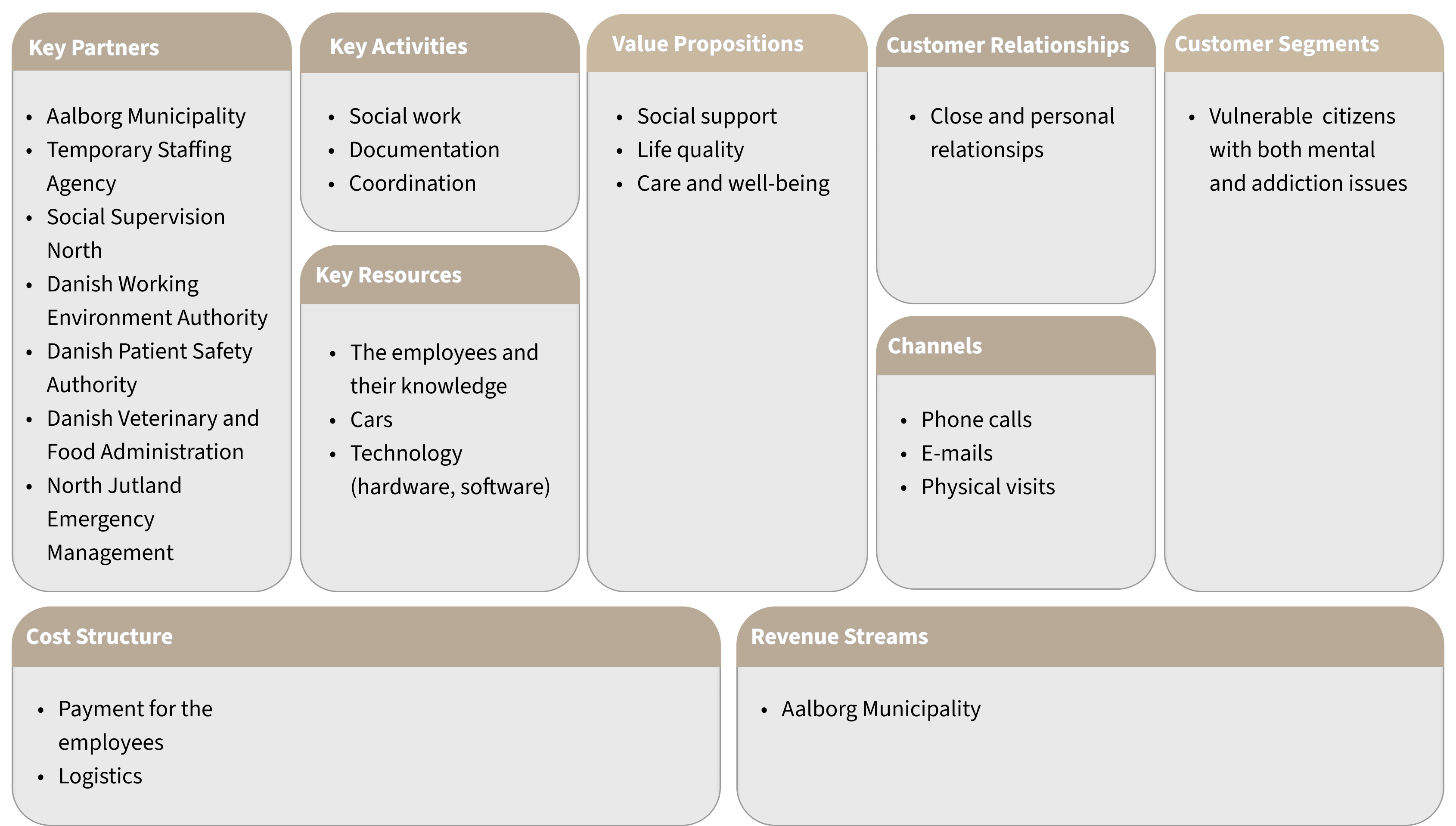
In order to we examine VoksenBøgen’s business model, we developed a BMC. VoksenBøgen agreed with the contents of the BMC.
Pinpointing the issues
We discovered that VoksenBøgen faces several challenges:
- They lack procedures for their internal (digital) processes
- The employees use a variety of different digital tools, which complicates their work
- The employees have varying levels of digital competence, motivation, and resources to improve their use of the current communication platform.
- Given that employees with low IT skills turn to their more IT-savvy colleagues when issues with technology arise, employees with low IT skills are not particularly self-sufficient.
Based on these identified challenges, we aimed to find a solution that could alleviate their issues.
Finding the right solution
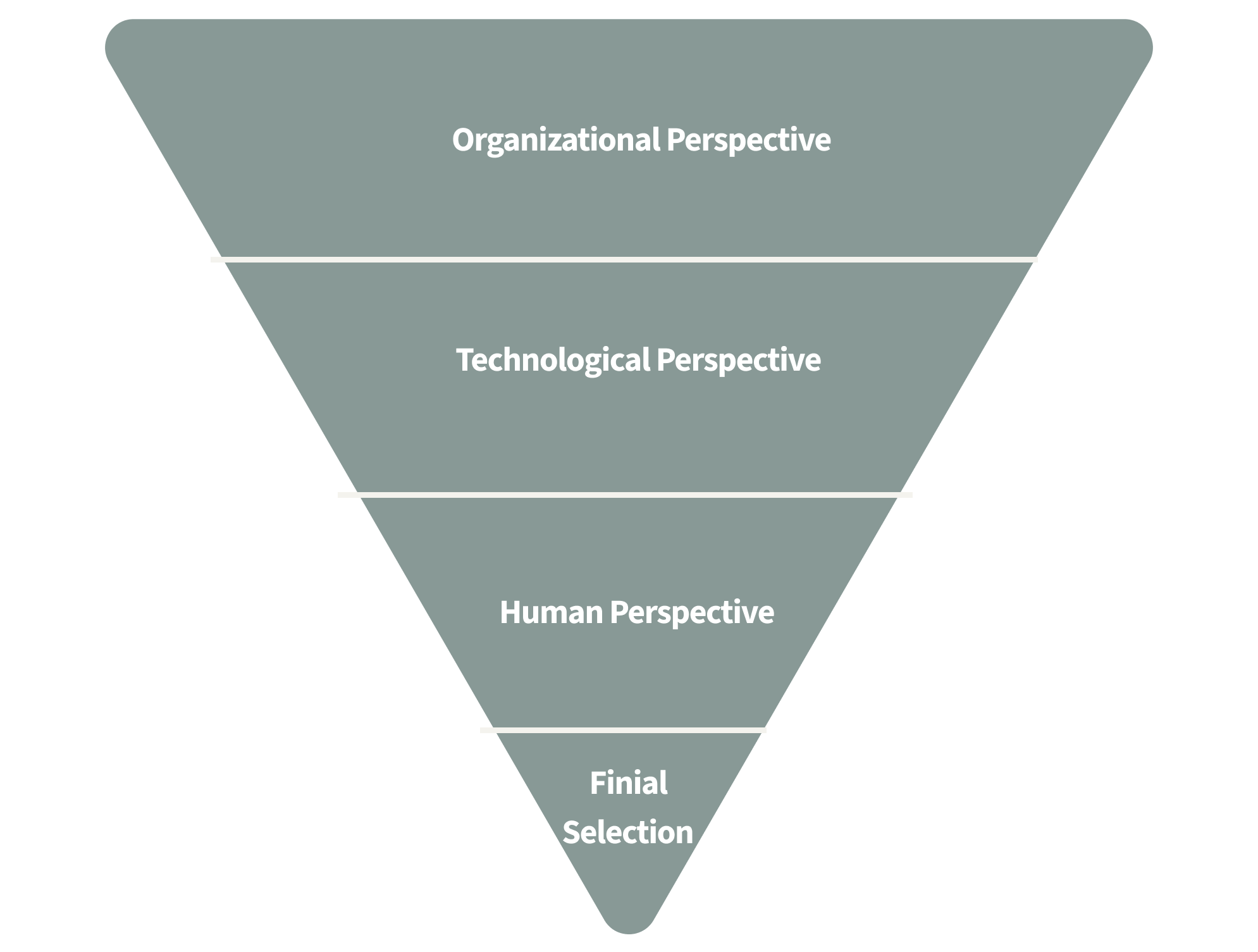
To find a solution for VoksenBøgen, we conducted a Google search for existing systems. We identified 18 systems that initially seemed relevant to VoksenBøgen’s challenges. Then, we compared the systems from various perspectives:
- Organizational Perspective
- VoksenBøgen’s ability to implement the new digital system and the viability of making their employees more self-sufficient.
- VoksenBøgen’s ability to implement the new digital system and the viability of making their employees more self-sufficient.
- Technological Perspective
- Considering whether the digital tools have the potential to simplify and streamline internal processes.
- Considering whether the digital tools have the potential to simplify and streamline internal processes.
- Human Perspective
- Evaluating the tools from the employees’ standpoint, including criteria such as avoiding time wastage in their workday.
What’s next?
The next step in this project would be to conduct tests of our selected digital tools, EG Sensum One and TicTac, with the users. This way, we could better clarify whether the proposed solution is suitable for them in practice and whether it can be implemented in other similar businesses.
Although our project is aimed at VoksenBøgen, we believe that our solution can be transferred to other similar cases. Through a survey where we investigated the challenges faced by similar companies, we found that other businesses also have similar problems, such as lacking established procedures and facing technical challenges among their employees.