Le Management Society
Timeline
2 months
My role
UX/UI designer
Platform
Figma
Problem
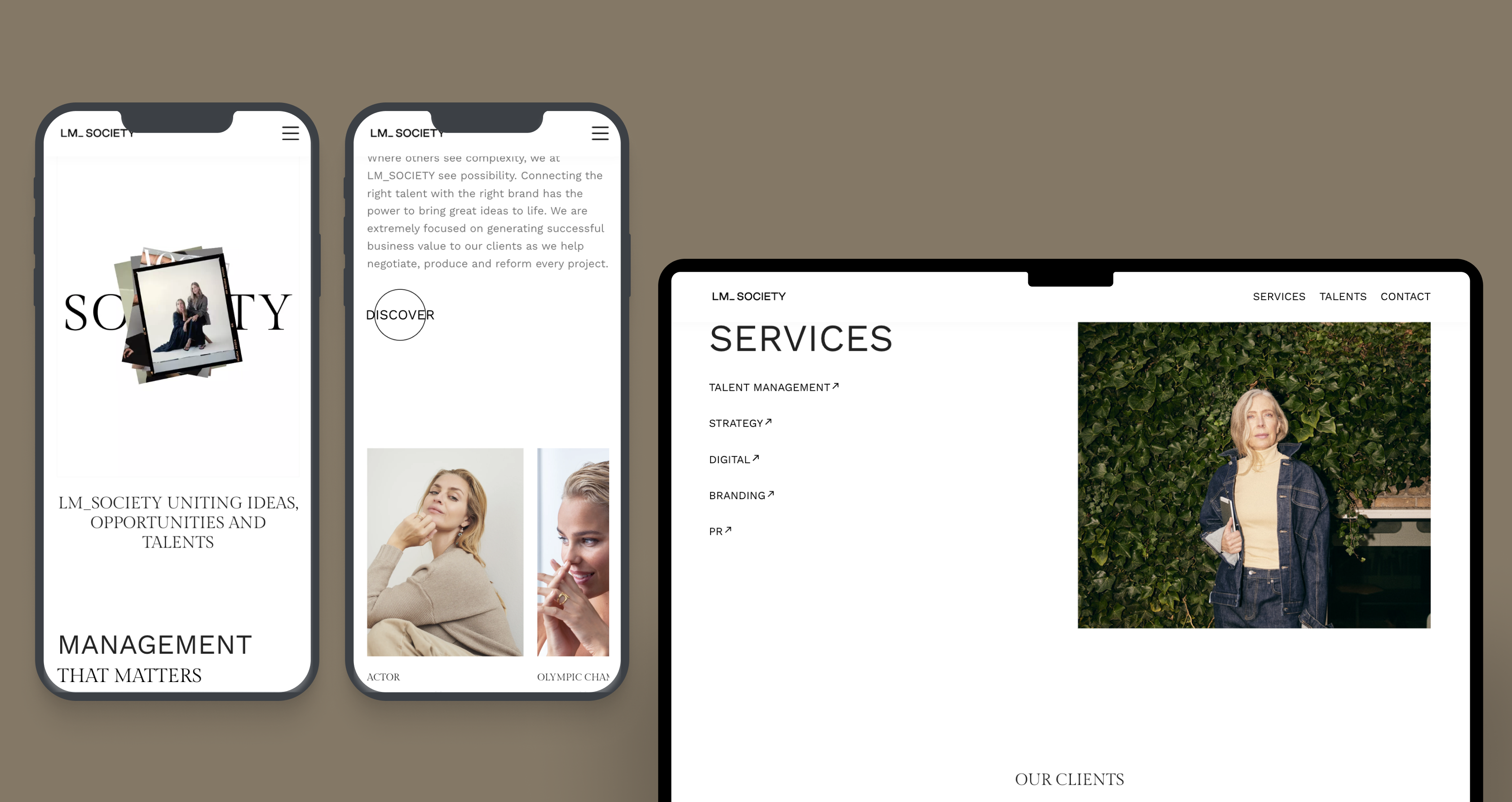
During my internship at Brand Institute, I developed a redesign of Le Management Society’s website. The company originates from the modeling agency, Le Management, which is the largest modeling agency in the Northen region of Europe. Le Management Society (LM Society) is a talent agency representing musicians, athletes, actors, and other talents in collaboration with partners and the press.
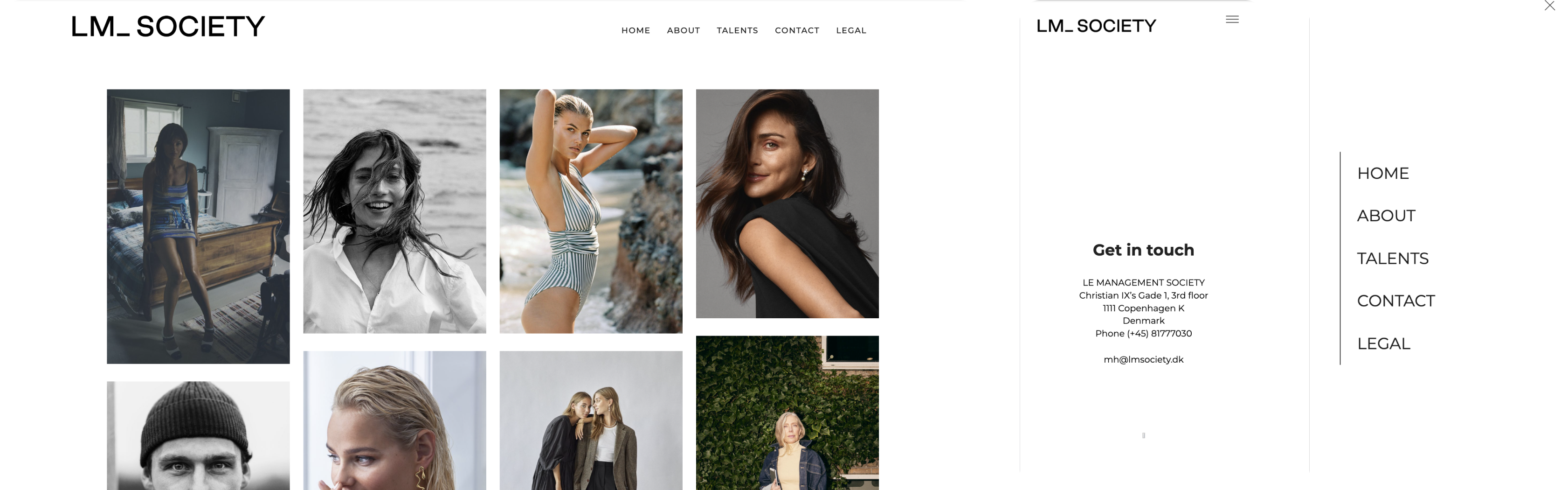
The pain points of the previous design were:
- Many large images that slowed down the website’s speed and made it difficult for employees to update the website.
- A non-user-friendly design that overshadowed essential features used daily to present and promote talents.
- A lack of focus on the company’s services.
Below is the previous design:
Solution
In the redesign, the focus was placed on:
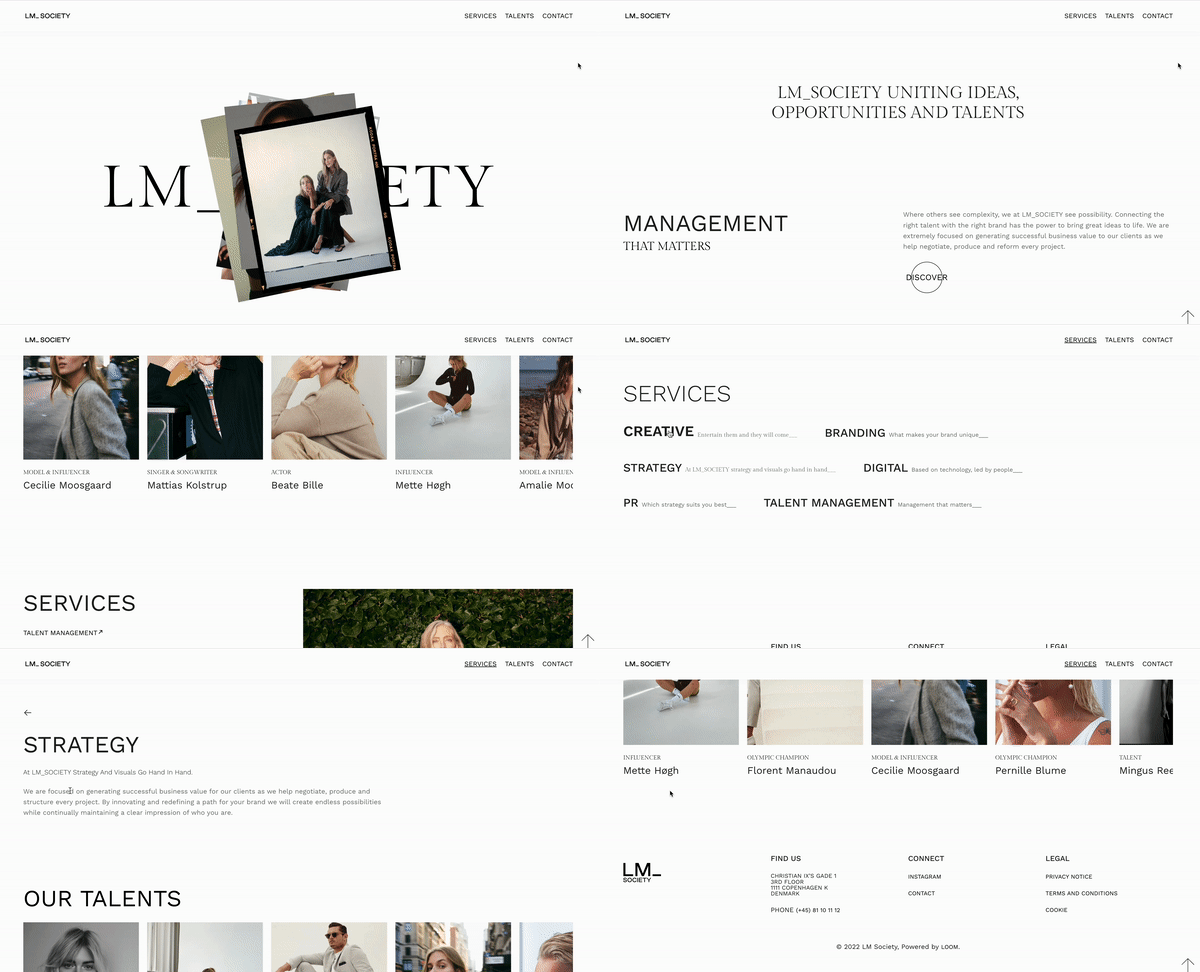
- Clearer information about the company’s services – a minimalist design with an emphasis on ‘less is more’ was prioritized.
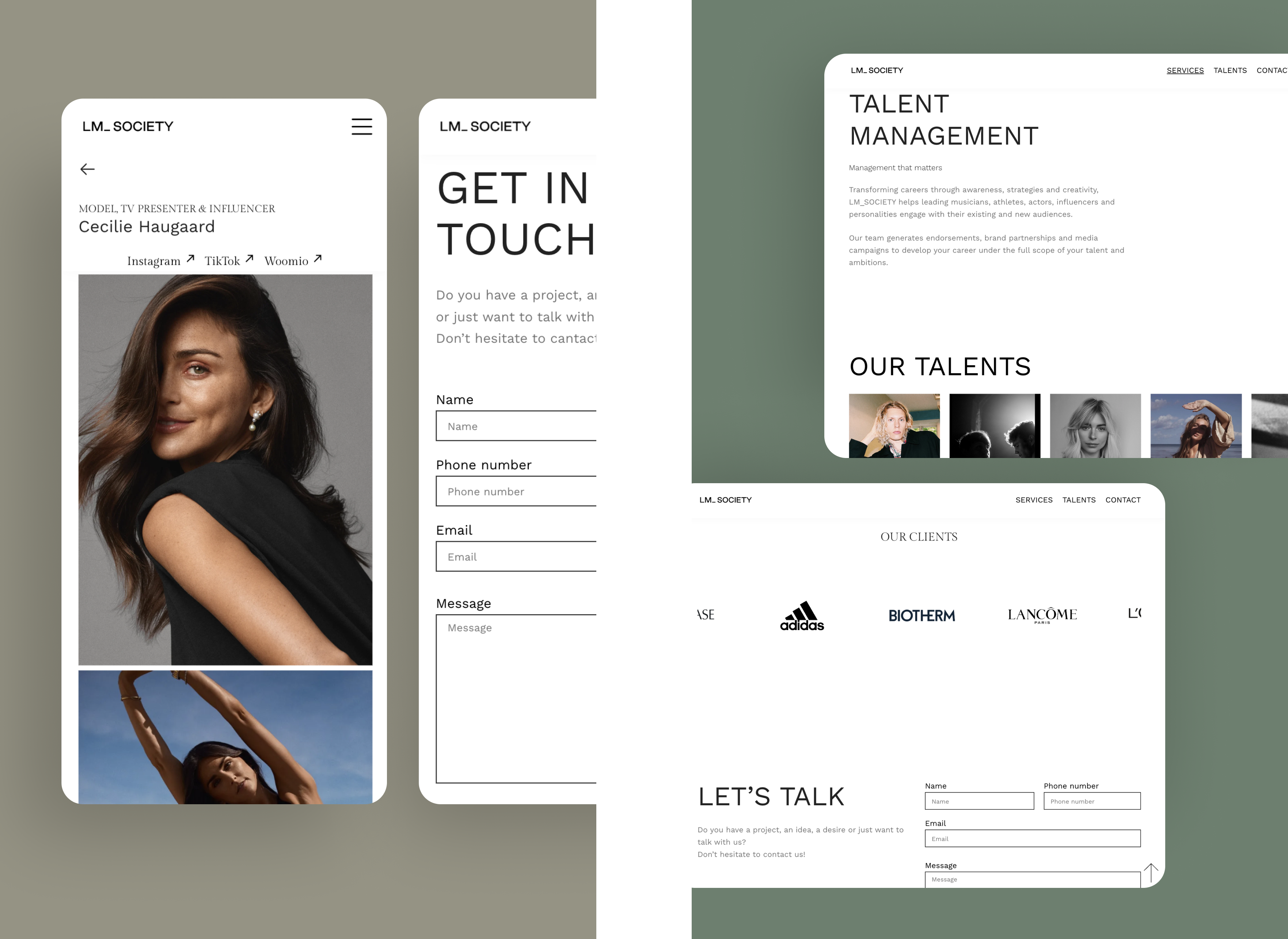
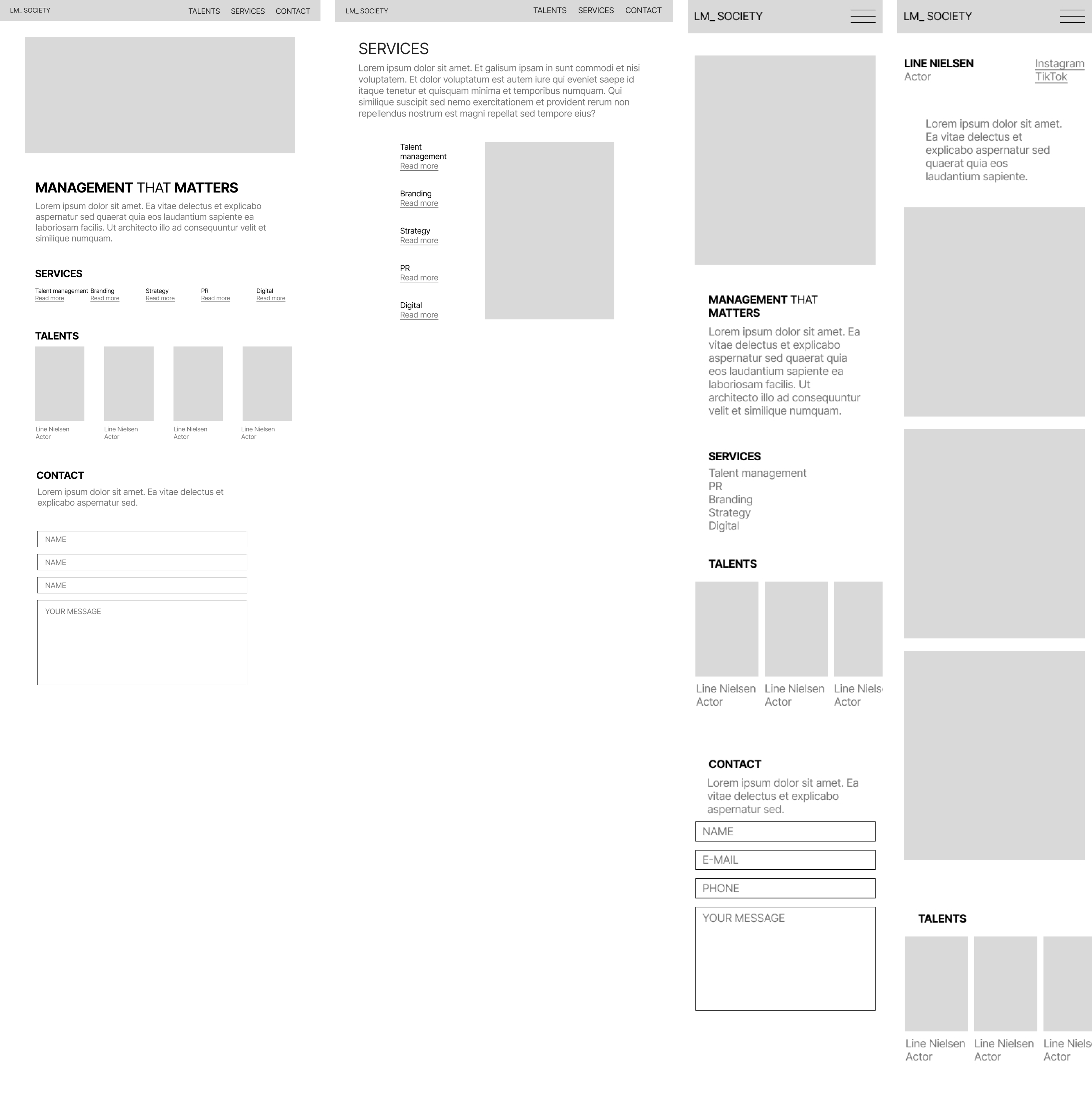
- A contact form on both the homepage and in the menu bar, making it easier for visitors to get in touch with the company.
- Organizing images in a way so that they do not overshadow essential features.
- Quick access to talents’ social media, as they are often considered celebrities and influencers and are frequently evaluated through their social platforms.
- Using black and white in the visual/UI design to highlight the talents’ portfolios, which consist of colorful images. This way, different elements do not compete for the user’s attention.
Design constraints 🔐
Since LM Society originates from Le Management, it was important to establish a common thread between these two companies. For example, this was achieved by streamlining fonts and colors. At the same time, it was crucial to create a clear distinction between the two companies, as the usage and target audiences of the websites differ from each other.
Furthermore, LM Society did not have plans to conduct additional user research or usability tests. This meant that we had to work within this constraint and fully leverage the employees’ existing knowledge about the target audience.
Process
Since it was important for LM Society to establish a common thread between the company and Le Management, I first examined Le Management’s website to decide which design elements could be incorporated into the redesign of LM Society’s website. These included typography and colors.
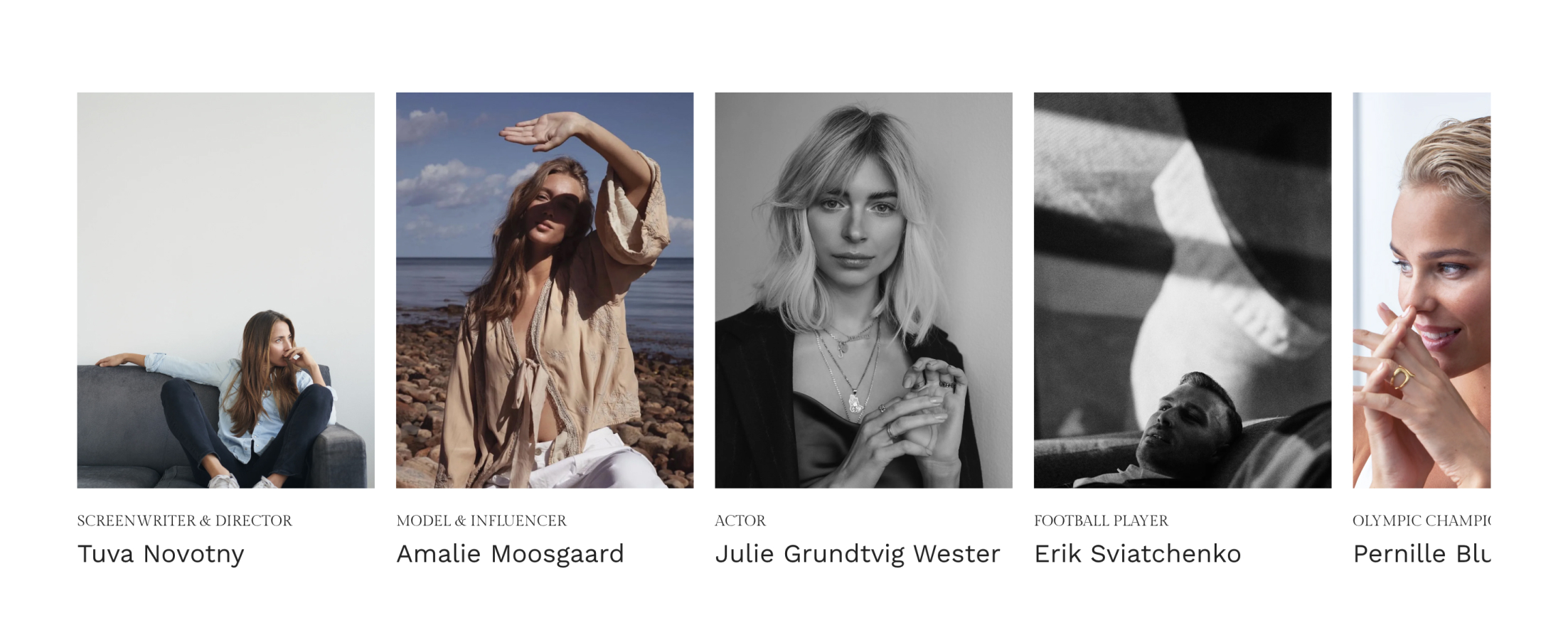
Subsequently, I conducted a competitive analysis by examining other talent agencies’ websites. The purpose was to identify what was successful for other agencies at the time and whether elements from them could also be implemented for LM Society. In this analysis, I discovered that many existing talent agencies primarily focus on one type of talent, such as influencers. Therefore, I aimed to highlight LM Society’s broad range of talents, including influencers, actors, musicians, and athletes, in the redesign. This was achieved through a horizontal scrolling element on the homepage, as seen below:
💬 Throughout the design process, there was ongoing dialogue and feedback from the employees at LM Society. This iterative approach allowed for exploration of the best possible solution for the company.
Wireframes
Design system
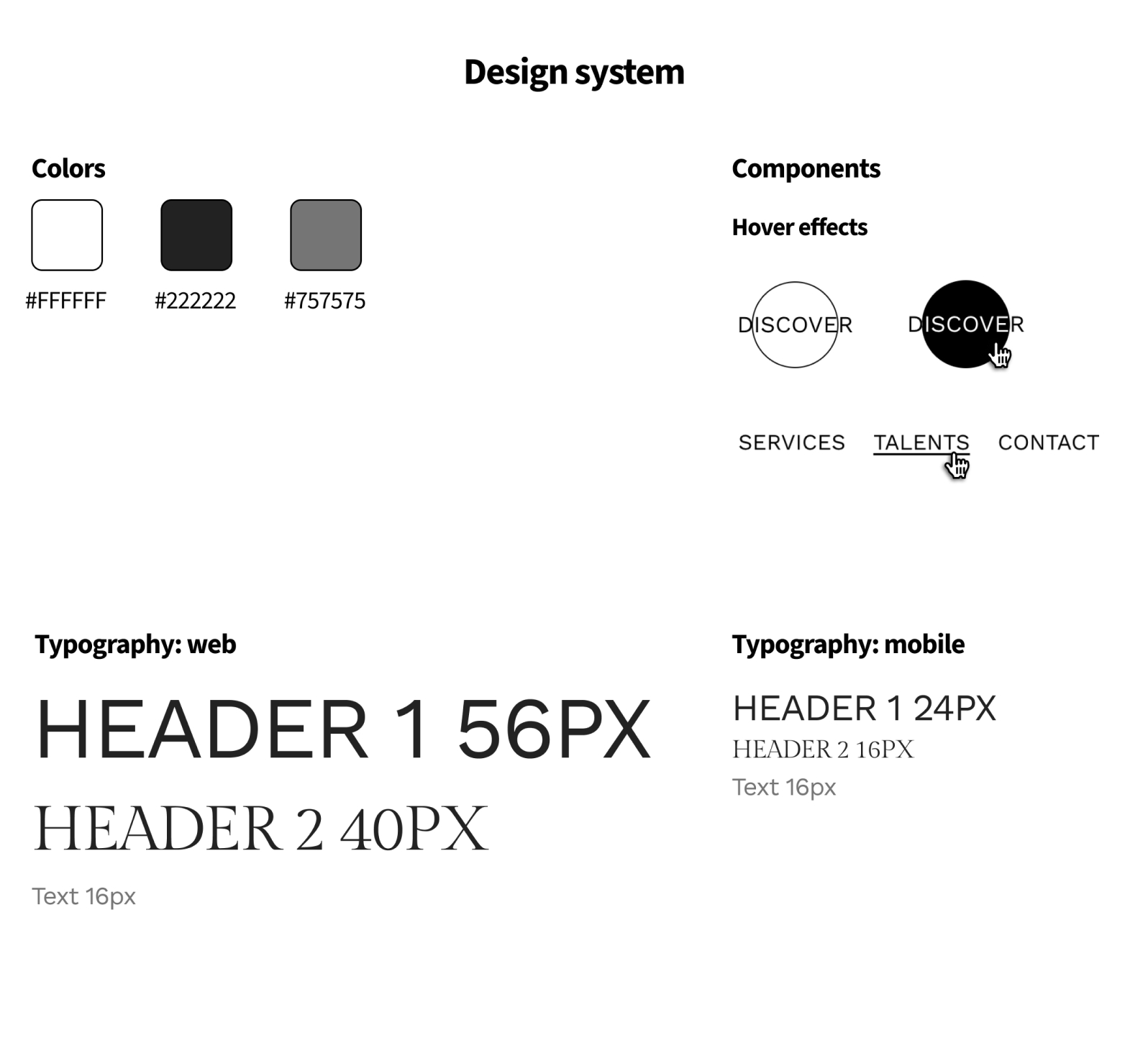
To facilitate the developers in bringing the design to life and to maintain consistent UI design throughout the website, a design system was developed.
What I learned 🌱
During the project, I learned the importance of utilizing all available resources to work within design constraints. While having more direct user feedback would have been ideal for this project, I found it to be crucial to leverage stakeholder dialogue and benchmark the design against solutions from other companies.
I collaborated daily with the developers, where I learned that the level of design detail doesn’t always translate easily into code, which is why we developed a design system to facilitate communication between designers and developers.